
FREE DOWNLOAD
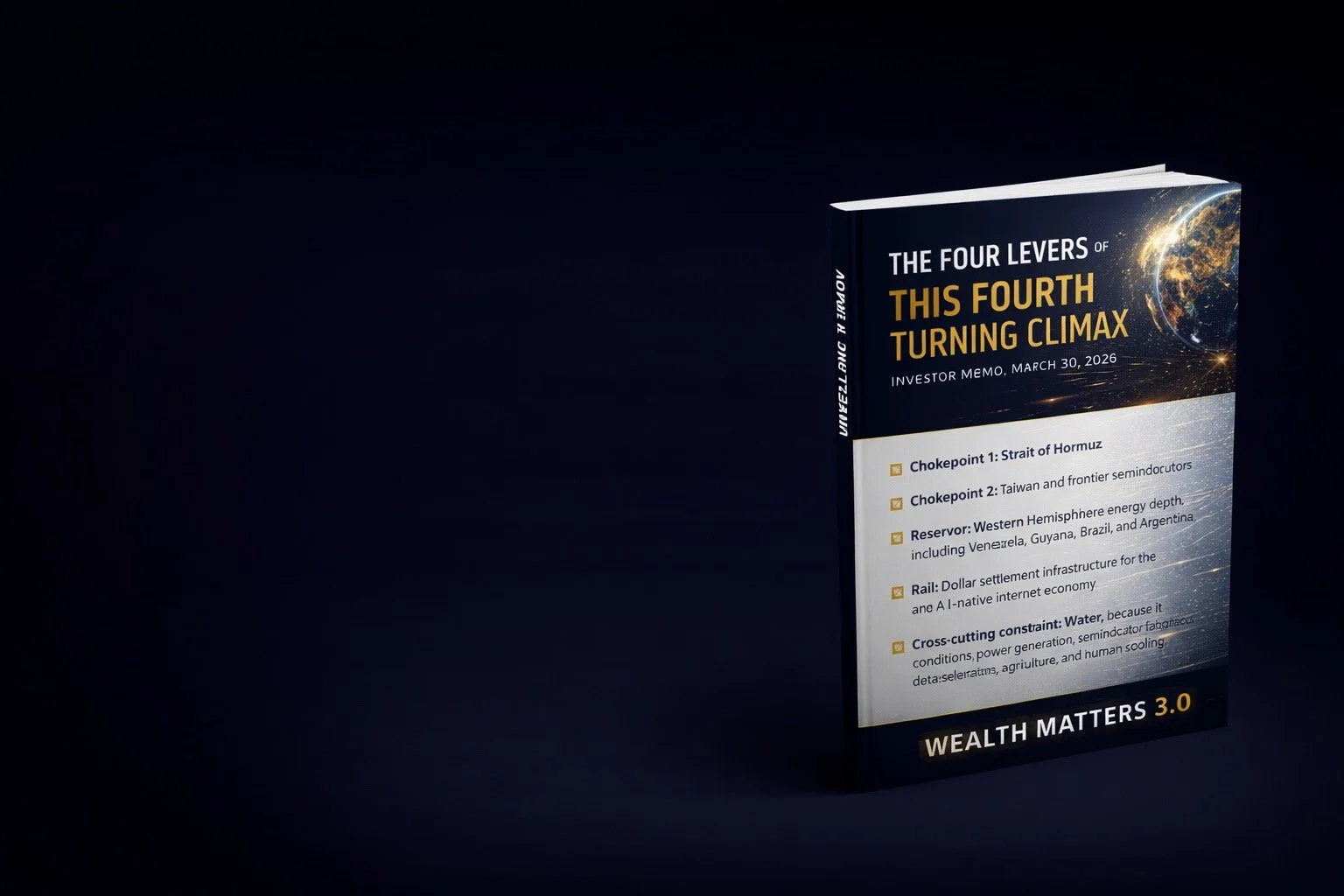
Investor Memo SPRING 2026
Office Hours
Access small-group office hours each week in a semi-private group session where you can ask-me-anything about the latest shifts in the Agentic AI economy, personal operational security strategies, tactics, asset protection, and the opportunity age that is being unlocked inside of all this near-term disruption. Cohorts have open enrollment periods each quarter. Inquire below. Membership dues, annualized, are $997
AI SYSTEM BLUEPRINTING
Bespoke AI Blueprints are deep‑dive, project‑based engagements where I design a custom architecture for your AI systems, asset protection strategy, and strategic OpSec layer around your existing structures. These blueprints align your entities, advisors, and technology stack into a coherent, self‑owned, and autonomous operating system for your family or enterprise. Each engagement maps risk, opportunity, and execution paths across pre‑ and post‑liquidity scenarios, resulting in a practical, prioritized roadmap your team can implement with or without my ongoing support. Fees for Bespoke AI Blueprints begin from $25,000+, depending on complexity, scope, and the number of entities, advisors, and jurisdictions involved.
FRACTIONAL CAIO
The Fractional CAIO Select Advisory offering is an ongoing, one‑on‑one relationship for families and principals who want embedded support beyond the initial blueprint. In this role, I act as your fractional Chief AI Officer, working directly with you and your advisory team to continually refine, implement, and govern your AI systems, asset protection structures, and OpSec practices. Engagements include active participation in key decisions, regular strategy reviews, and hands‑on coordination with legal, tax, and technical partners to keep your architecture aligned with shifting markets and risks. Fees for Fractional CAIO Select Advisory typically range from 20 bps to 70 bps, based on net worth and complexity, with minimum annual retainers starting at $350,000*. If you have a minimum of $50,000,000 in AUM, you can book a mutual discovery session to discuss fit at the button below.

THE ATOMIQ LEVEL
A show for financial advisors, HNWIs, and serious families growing their business, protecting their estate, and integrating hard assets, and sophisticated alternatives like bitcoin, trade finance, and niche CRE into real‑world plans—without blowing up compliance, sanity, or what actually makes life worth living, where NetWorth + Net Happiness both grow as we enter the next world order. If you’re an advisor, RIA, planner, or family‑office lead, this is your room. If you’re a high‑ or ultra‑high‑net‑worth investor who wants to understand how your advisors and sponsors really think about Bitcoin and private deals—not just the headlines—and align that with a life you actually enjoy, you’re in the right place.Guests range from in‑the‑trenches advisors and deal sponsors to CPAs, estate attorneys, and founders who have navigated major exits, concentrated risk, BTC, and illiquid assets. This is a show for serious people where the core formula and mission are simple: NetWorth + Net Happiness rising together as a multitude of forces unleash the next world order.


WORKSHOPS
Own + protect + ACCESS turnkey alternative ASSET INvestment VEHICLES WITH ME
The Anti‑Fragile RIA: Building A FIRM That Gets Stronger Under Pressure
Anchored in Chris’s bestselling 2025 book: The Generative Organization: The AI Playbook for Exponential Leaders
Why join Chris: Drawing on real implementations of a custom AI back‑office OS for RIAs, Chris shows firm owners how to turn operational drag, compliance burden, and tech sprawl into a durable advantage—so the practice becomes stronger every time markets, regulation, or staffing get stressed.
What he teaches:
How to design an “anti‑fragile” firm where compliance load, onboarding, and reviews run on standardized workflows instead of heroics and late nights
How to use AI‑assisted systems to reclaim 20–40 hours a week from manual work and reinvest that time into clients, strategy, and growth
How to replace key‑person risk and scattered tools with a single, owned operating system that captures your processes and scales with AUM
Audience Takeaways:A practical model for turning back‑office chaos (compliance, onboarding, billing, reviews) into repeatable, audit‑ready flow
A blueprint for using AI where it actually helps RIAs—meeting notes, prep, follow‑ups, and workflows—without sacrificing control or judgment
A clear picture of what it means to be an anti‑fragile firm: more capacity, less calendar pressure, and a business that becomes more valuable as complexity rises
Expect high marks from RIA principals and operators with between $75m-$1B in AUM who are tired of feeling one staff departure or one exam away from a crisis—and who are ready to turn their back office into a strategic asset instead of a hidden liability

Incremental Alpha: Building a BTC‑Powered Hard Asset Sleeve
Anchored in Chris’ Bestselling books: Digital Sense and The Generative Organization and forthcoming Rockefeller Method Rewired
Why join Chris: Combining deep experience in AI systems and hard‑asset portfolio design, Chris shows RIAs how to engineer a Bitcoin‑powered hard asset sleeve that creates incremental alpha in real practices—not just decks. He connects sponsor‑grade structures, advisor workflows, and AI‑assisted processes so firms can add BTC exposure to private real‑asset strategies without breaking compliance, capacity, or client trust.
What he teaches:
How to segment clients into clear tiers and turnkey BTC + hard‑asset sleeves that fit each one
How to use AI‑assisted underwriting, documentation, and review prep to evaluate BTC‑powered hard‑asset vehicles in a repeatable way
How to build an implementation playbook that moves from curiosity (“Should we add BTC?”) to funded allocations in sponsor‑run structures
Audience Takeaways:
A practical BTC‑Powered Hard Asset Sleeve Blueprint™ you can adapt to your own IPS and platform
A simple matrix that clarifies what the advisor and their AI-powered back office should handle (prep, analysis, follow‑up) and what remains purely the sponsor’s judgment and responsibility
Specific workflow and partner ecosystem upgrades—from client discovery, BTC lending, and OTC desk integrations, institutional-grade multi-sig self-custodial solutions for your clients, to ongoing reviews—that free advisor capacity while deepening trust around Bitcoin and private deals
This workshop gives RIAs and firm leaders a concrete path to add BTC‑powered hard‑asset exposure as a durable, defensible alpha source—without turning their practice into a speculative crypto shop or a full‑time syndication office.
